

Welcome! We have created this comprehensive guide with one key mission: Demystifying your energy bill.
To achieve this, we’ll dive deep into the ins and outs of business energy tariffs, the factors influencing pricing, and the key components of your energy bill. Plus, we’ll unravel the mystery of energy metering, shedding light on the different types of meters and how they impact your energy costs.
By the end, you’ll have a solid grasp of how energy pricing works, what factors to consider, and how to effectively manage your business’s energy expenses.
How Business Energy prices work:
Before we investigate the components of your energy bill, let’s first take a step back and properly understand how business energy pricing works. By taking a deeper look at types of energy tariffs and what factors influence energy pricing.
Types of Business Energy Tariffs
Quick definition: What Are Business Energy Tariffs?
Business energy tariffs are pricing plans provided by energy suppliers to businesses for electricity and gas. They dictate the rate businesses pay for energy consumption and come in two main types: Fixed rates and variable rates.
Fixed-rate Tariffs
Fixed-rate tariffs are a stable pricing structure, where the cost per unit of energy remains consistent throughout a predetermined contract period. Let’s look at some advantages and disadvantages.
Advantages
Predictable Costs: A consistent cost per unit of energy allows for predictable monthly energy costs for your business.
Budgeting Ease: Knowing your energy costs allows you to plan and allocate your budget effectively. This can be crucial if your business has tight budget constraints.
Protection Against Market Fluctuations: A fixed-rate tariff acts as a safeguard against market price volatility by locking in a price for the length of your contract.
Disadvantages:
Market Dynamics: If energy prices fall, you could get stuck into an expensive long-term contract and miss out on the opportunity to benefit from lower market rates.
Exit Fees: Some fixed-rate contracts can include exit fees or penalties for terminating the contract early. It is important to be aware of these fees, in case of the possibility of changing energy needs or if more competitive rates become available.
Variable-rate Tariffs
Variable rate tariffs are a pricing structure which allows for fluctuations in the energy market. So, the cost per unit of energy is directly influenced by the state of the market. This comes with both advantages and disadvantages:
Advantages
Potential Cost savings: Flexibility allows for cost savings, during periods of market decline when compared to fixed-rate tariffs.
Short-term commitment: Variable rate tariffs can offer short contract terms, providing businesses with the opportunity to reassess energy strategies more frequently.
Disadvantages
Market Volatility Exposure: During periods when energy prices rise, your business could be exposed to higher costs. This could have serious implications for a business’s overall financial stability. So, variable-rate tariffs may require a deeper understanding of market dynamics and constant monitoring to manage risks.
Budgeting Challenges: Lack of cost predictability can make it difficult to accurately budget for energy expenses. This could be a concern for businesses with strict budget constraints.
Now we have looked at the two types of Business energy tariffs, it is important to understand what can affect the prices of these tariffs when signing a contract.
Factors Influencing Energy Bill Pricing
To gain a complete understanding of your energy bills, it is important to know the factors that influence your price. Arming yourself with this knowledge is an important step to managing the cost of your bills.
Energy Consumption
The amount of energy a business consumes directly influences costs, this emphasises the need for your business to optimise consumption through energy-efficient practices and technologies. This needs to be paired with accurate measurement of your energy consumption and a good energy meter, such as a smart meter. This enables, your business to make positive impacts on the pricing of your bill, leading to the potential for cost savings and improved financial sustainability.
Business Size And Type
Energy suppliers often tailor tariffs based on the size and type of business. Different industries can have unique energy requirements and suppliers offer specialised tariffs to meet those needs. A small café is going to have different needs compared to a manufacturing plant and prices will reflect this.
Contract Length
The length of the energy contract plays a big role in pricing:
Short-term Contracts: Offer flexibility, allowing businesses to reassess their energy needs more frequently to take advantage of fluctuations in the energy market.
Long-term Contracts: Provide stability and are normally rewarded, with better rates, for signing on for longer.
The Main Components of Your Business Energy Bill
Now you have a better understanding of how energy pricing works, let’s get into the real focus of this guide which is what the main components of your business energy bill are. Your energy bill is split into two main parts: the standing charge and the unit rate. Let’s explore their differences below.
Standing Charge:
This is a fixed daily fee that covers maintaining the energy supply, such as infrastructure and metering costs. It’s applied every day, ensuring a continuous connection to the energy grid, even when energy isn’t actively used. For smaller businesses or those with lower consumption, this charge can be a significant part of the bill.
Unit Rate:
The unit rate is the cost per unit of energy used, measured in kilowatt-hours (kWh) for electricity and cubic meters (m³) for gas. This rate directly correlates with the amount of energy used by the business and is the bulk of the energy bill. Higher consumption leads to higher overall costs.
Difference and Impact:
The standing charge provides a base cost for access to energy and maintaining infrastructure, while the unit rate reflects the actual energy consumption. Businesses with lower energy usage may find the standing charge to be a larger portion of their bill, while those with higher consumption levels will see the unit rate as the main cost driver.
Balancing these two components is key to optimising energy costs. While reducing energy consumption can lower the impact of the unit rate, it’s important to consider how this might affect the significance of the standing charge in the overall bill. Finding this balance is crucial for businesses aiming to minimise their energy expenditure effectively.
Handy Bits Of Information Found On Your Energy Bill
In this segment, we’ll explore essential details you need to know about your business energy bill to ensure smooth communication with your energy provider and efficient management of your energy contract.

What is a Supply Number:
This is the unique identification number assigned to your energy supply by your energy provider. It helps them keep track of your energy usage and account details. Think of it like a customer ID number for your energy service. It’s important to have this number handy when communicating with your energy provider or when setting up new energy services for your business.
What is an MPAN number?
Your MPAN (meter point administration number) is a unique identifier assigned to each physical energy meter for electric usage at your business premises. It helps energy providers track and manage your meter, ensuring accurate billing and maintenance. Think of it as a special ID for your energy meter. You may need this number when discussing meter-related matters with your energy provider or when switching suppliers.
Your MPAN number can be found on the bottom line of your supply number.
What is an MPRN number?
Like the MPAN, your MPRN (meter point administration number) is a unique identifier assigned to each physical energy meter for gas usage at your business premises. Just like your MPAN, you may need this number when discussing meter-related matters with your energy provider or when your switching supplier.
Your MPRN number can be found on the bottom line of your supply number.
Additional Charges And Fees
In this section, we will go through additional charges that may be found on your bill. Your business will not face all of these charges and fees, but you will definitely encounter a few of them.
Night Charge, Evening Charge and Weekend Charges:
Night charges, evening charges, and weekend charges are time-of-use pricing plans that can help your business save money on electricity. With these plans, you get discounted rates for using energy during specific off-peak times, like late at night or on weekends. By scheduling tasks that use a lot of energy, such as running equipment or doing manufacturing work, during these times, you can lower your energy costs and make your business more efficient. It’s a win-win for your bottom line and the environment!
Climate Change Levy (CCL):
The Climate Change Levy (CCL) is a tax on the energy used by businesses. It’s meant to encourage using energy more efficiently and to reduce pollution.
You’ll see this charge on your energy bill, and it’s important to understand it because it affects how much you pay for energy.
Availability Charge:
Also known as a capacity charge or demand charge, an availability charge is a fee imposed by energy providers based on the maximum amount of power a customer is expected to use during a specified period, normally a month. It covers the cost of ensuring enough capacity to meet the customer’s peak demand and it is separate from charges based on actual consumption.
MOP Charges:
“MOP charges” are the fees for your energy meter services, like installation and maintenance. They cover the costs of keeping your meter working accurately so you can track your energy use for your business. This charge can be separate from your energy bill and is part of the service agreement with your meter provider.
Direct Debit Discount:
This is a special offer from many energy suppliers. This means that if you pay for your energy bills automatically through direct debit from your bank account, you get a discount on your bill. It is a super convenient way to pay your energy bills and save money at the same time!
Understanding Energy Metering And What It Means For Your Energy Bill:
Finally, let’s look at energy metering and how this can affect your bills. Knowledge of this can have serious benefits for your business from accurate billing to budget planning. So, in this section, we’ll delve into:
- Unravelling the difference between imperial and metric meters to grasp their direct impact on your bills.
- The crucial role of smart meters and AMR meters in revolutionising your energy bills.
- Understanding how real-time updates and sending data to your supplier automatically will help you accurately monitor your energy usage and benefit your business.
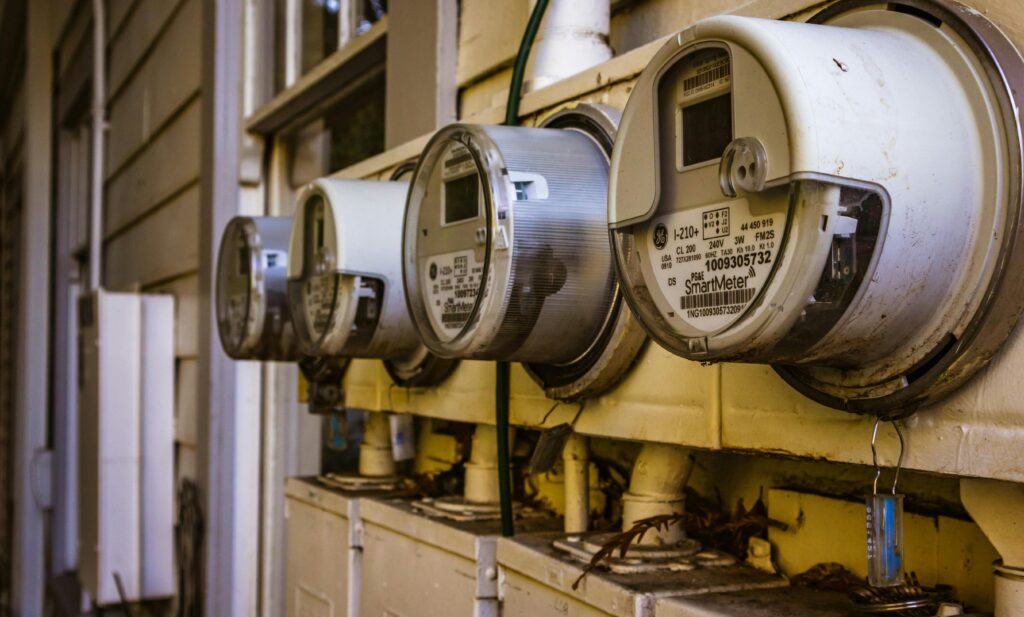
Imperial Meters vs. Metric Meters: What’s the difference?
It is important to inform your energy supplier what type of meter is on your property for accurate billing. So, telling the difference between the meters is as simple as examining the units displayed on the meter. Use this little comparison guide below:
| Imperial Meters: | Metric Meters: |
| Measure gas usage in cubic feet (Ft3) or gallons (gal). | Metric Meters measure gas usage in cubic meters (m3). |
| Measure electricity usage in kilowatt-hours (kWh) | Measure electricty usage in kilowatt-hours (kWh) |
| Tned to be found in older properties. | The standard type of meter used in most modern properties and new installations. |
What are smart meters and AMR meters and what role do they play in my energy bills?
Smart Meters:
Smart meters are the game-changer of energy meters, pushing the energy business into the twenty-first century! They can talk to your energy provider and give you real-time updates on how much energy you’re using.
With smart meters, you can see when you’re using the most energy and find ways to save money by using less during peak times. Finally, they eliminate the need for someone to come and read your meter manually which drives down costs.
AMR (Automatic Meter Reading) Meters:
AMR meters are another type of meter which automatically sends your energy usage data to your provider without anyone needing to come to your property.
This means no more estimated bills or waiting for someone to read your meter. It’s all done automatically, making your life easier!
Beneftis of these Advanced Meters for Businesses:
Benefits of these Advanced Meters for Businesses
These high-tech meters have lots of benefits for businesses:
Keep Track Easily: You can easily monitor your energy usage in real time and see where you can save money.
Save Money: By understanding when you’re using the most energy, you can find ways to use less and save money on your bills.
No More Guessing: With advanced meters, your bills are always accurate because they’re based on actual usage, not estimates.
Help the Environment: Using less energy not only saves you money but also helps the environment by reducing your carbon footprint.
Hopefully, you now understand the different types of meters and the benefits they can offer your business. Never underestimate the ability this knowledge and technology, can give you to manage your energy usage smarter and save money for your business.
Final Thoughts:
To wrap things up, you are now armed with knowledge about:
- Types of energy tariffs,
- What influences prices, and
- Your energy bill components
- Handy information on your energy bill
- Difference between imperial and metric meters
- Benefits of different meters
- You are now empowered to make informed decisions that optimise your energy spending.
Understanding these factors and how they affect your business energy bill is crucial for savvy cost management and budget planning. You are hopefully now empowered to make informed decisions that optimise your energy spending.
With this expertise in your toolkit, you are on the right path to you confidently navigating the energy market and making smart choices.
How we can help you:
If you want any further help understanding your energy bill or want to speak to an expert about business energy, completely free, get in contact with us. Here’s why:
- We have operated in the energy market since 2006, which has given us in-depth knowledge of the market, enabling us to navigate complex pricing structures and identify the best deals tailored to your Business’s specific needs
- We are experts in negotiating with suppliers and securing competitive rates
- We will streamline the contract process, saving you valuable time and effort
- We are always on hand throughout the length of your contract should there be a query or dispute with the supplier
We hope you enjoyed this guide and we look forward to hearing from you!


